
The way small and midsize businesses approach self funded health insurance is changing fast. For years, innovative group health insurance structures were reserved for large corporations with deep pockets and dedicated HR teams. Today, however, artificial intelligence is reshaping how companies of every size structure, manage, and optimize self-funded employee benefits — giving startups and growth-stage companies access to tools and strategies that were simply out of reach a decade ago.
Understanding Self Funded Health Insurance in Today’s Market
Self funded health insurance — sometimes called self-insured health insurance — is a model where an employer takes on the financial risk of providing healthcare benefits directly to employees. Instead of paying fixed premiums to a traditional carrier, the employer funds claims as they occur. This typically involves a third-party administrator (TPA) under ERISA and stop-loss insurance to guard against catastrophic claims.
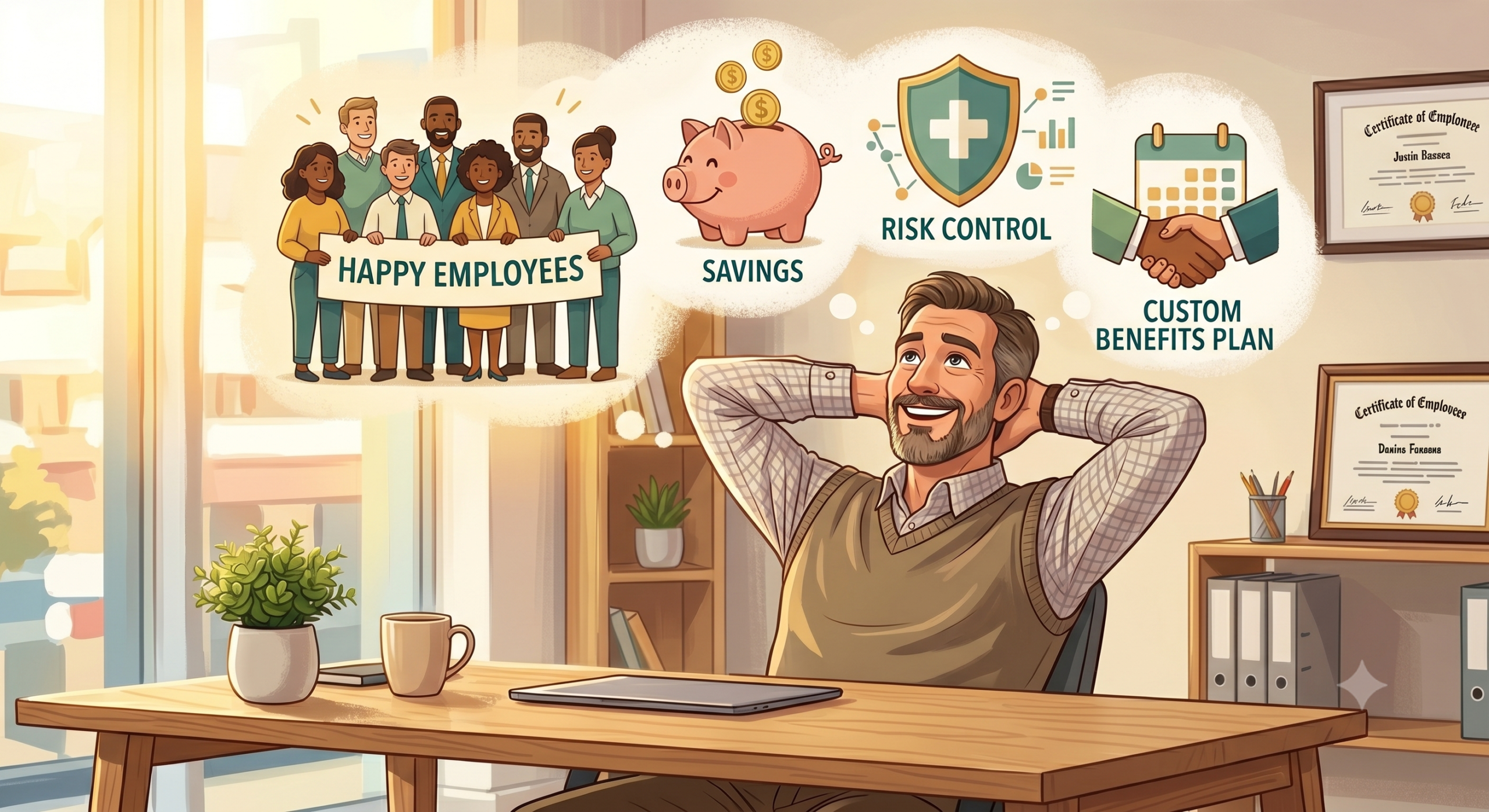
For another helpful perspective, this Self Funded Health Insurance highlights practical trade-offs for buyers. For larger companies, this model has been standard practice for years. The appeal is clear: greater control over plan design, potential cost savings when claims run lower than expected, and access to detailed claims data that fully-insured plans simply don’t provide. For a deeper look at practical trade-offs, the self-employed health insurance overview highlights considerations that apply to many small-group buyers as well.
For smaller companies, however, the risks historically outweighed the benefits. Unpredictable claims, limited bargaining power, and administrative complexity made self-insured coverage feel out of reach. That’s precisely where modern technology — and specifically artificial intelligence — is changing the equation.
Self Funded Health Insurance: The Rise of Captive Health Insurance Programs
One of the most innovative structures gaining traction among small and midsize employers is the captive health insurance model. In essence, a captive allows multiple smaller companies to pool their risk under a shared insurance structure. As a result, they gain the risk-spreading advantages traditionally reserved for large employers.
When combined with self-funding, captives give startups and growth companies a powerful alternative to the traditional group health insurance market. Instead of community-rated pricing that inflates costs for healthy employee populations, participating companies get more accurate pricing based on actual claims experience — while still protecting themselves from the volatility of going it entirely alone.
Self Funded Health Insurance: Why Captives Are Gaining Momentum
The appeal of captive health programs has grown significantly as healthcare costs continue to outpace inflation. Companies that join well-managed captives can, for example:
- Access lower administrative costs through shared resources
- Benefit from collective stop-loss purchasing power
- Gain data analytics that inform smarter benefit decisions
- Customize plan designs to attract and retain top talent
For startups in particular, competitive employee benefits are often a make-or-break recruiting tool. Consequently, offering a well-designed self-funded plan through a captive structure can signal genuine financial sophistication and a real commitment to employee well-being.
Where Artificial Intelligence Enters the Picture
The intersection of AI and employee benefits is no longer theoretical. Indeed, forward-thinking benefit consultants, TPAs, and insurtech companies are actively deploying these tools to transform every phase of self-funded health plan management.
Predictive Analytics and Risk Stratification
One of the most powerful AI applications in this space is predictive analytics. By analyzing historical claims data, demographic information, and external health trends, AI platforms can identify high-risk employees before claims become catastrophic. As a result, plan sponsors can intervene proactively — offering disease management, care coordination, or preventive services to individuals most likely to generate significant costs.
Consider a startup with 75 employees. A single catastrophic claim can derail an entire year’s health budget. AI-driven risk stratification gives these companies the foresight to manage that risk intelligently. Furthermore, this capability was simply unavailable without expensive actuarial teams just a few years ago.
Smarter Plan Design Through Data
Traditional group health decisions were often made with limited information. Brokers presented a handful of carrier options, and employers chose based on premium cost and gut instinct. Self-funded employers, by contrast, own their claims data. Moreover, AI tools can now process that data at scale, revealing which benefits are actually used, where cost drivers are hiding, and how plan design changes might affect both employee satisfaction and total plan cost.
For growth companies scaling headcount rapidly, these insights are invaluable. As a company moves from 50 employees to 200 in a single year, an early benefits strategy may no longer serve the evolving workforce. Fortunately, AI allows plan sponsors to adjust in near real-time, rather than waiting for annual renewal cycles.
AI-Powered Member Navigation and Engagement
Employee benefits only deliver value when employees use them well. One persistent challenge is that workers often struggle to navigate the healthcare system efficiently. This leads to unnecessary emergency room visits, avoidance of preventive care, and poor chronic disease management.
AI-driven member engagement platforms address this gap directly. Specifically, conversational tools guide employees toward high-quality, cost-effective providers, answer benefits questions around the clock, and help members weigh options before making healthcare decisions. For startups with lean HR teams, this kind of automated support is transformative. In short, it delivers a high-touch benefits experience without requiring a dedicated specialist for every inquiry.
Fraud Detection and Claims Integrity
Healthcare fraud and billing errors represent significant waste in employer-sponsored health plans. AI is proving exceptionally capable at identifying anomalous billing patterns, duplicate claims, and potential fraud that human reviewers might miss in large data volumes.
For self-funded employers, this directly impacts the bottom line. Notably, every dollar recovered through claims integrity programs stays in the plan — potentially lowering costs or expanding benefits for employees.
The Opportunity for Startups and Growth Companies
Perhaps the most exciting aspect of this AI-driven evolution is that it is democratizing access to self-funded health plans. Tools and strategies that once required actuarial teams, large legal departments, and enterprise-scale IT infrastructure are now accessible to companies with as few as 25 to 50 employees.
Insurtech startups are building platforms specifically for small and midsize employers. These solutions bundle TPA services, stop-loss insurance, captive access, and AI-driven analytics into a single, user-friendly package. As a result, a Series B startup with 100 employees can build an employee benefits program that rivals a Fortune 500 offering — at a fraction of the cost of traditional fully-insured alternatives.
What to Look for in a Modern Self-Funded Solution
Growth-stage companies exploring this space should, therefore, evaluate potential solutions based on several key criteria:
- Data transparency: Does the platform give you genuine access to your claims data, and can you act on it meaningfully?
- AI capabilities: Is the technology genuinely predictive and actionable, or is “AI” simply a marketing label?
- Stop-loss protection: Is coverage both specific (per-member) and aggregate (total plan), and is it competitively priced?
- Captive eligibility: Does the solution offer access to a well-managed captive arrangement for additional risk-sharing?
- Concierge and navigation support: Are employees guided toward smart, cost-effective healthcare decisions?
- Compliance infrastructure: Does the platform handle the regulatory complexity of self-funding so your HR team doesn’t have to?
A New Era for Employee Benefits
The convergence of self-funded health structures, captive risk-pooling, and artificial intelligence represents one of the most significant shifts in employer-sponsored benefits in a generation. For too long, innovative employee benefits were the domain of large employers with vast resources. That exclusivity, however, is eroding rapidly.
Startups and growth companies that move proactively to explore self-funded models — armed with the right data, the right partners, and AI-driven tools — are positioning themselves not only to save money, but also to build genuinely competitive benefits programs. In a market where every hiring advantage matters, that’s not a minor footnote. Rather, it’s a strategic imperative.