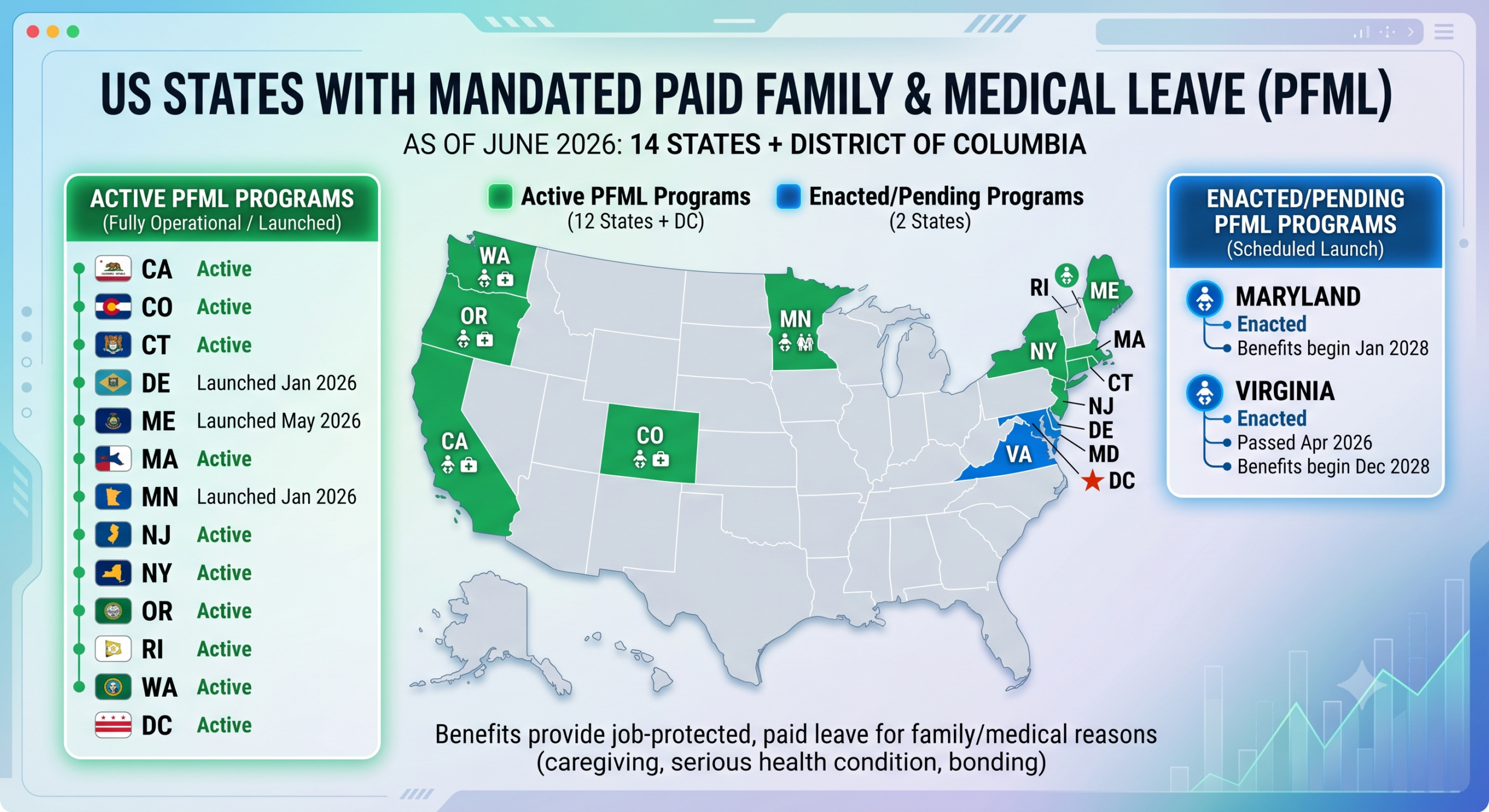
Across the United States, a significant shift is underway in how workers access time off for life’s most critical moments. From welcoming a new child to recovering from a serious illness or caring for an ailing parent, paid family leave laws are reshaping employee benefits at a pace few predicted even a decade ago. For employers with workers spread across multiple states, navigating this evolving patchwork of regulations has consequently become one of the most complex challenges in benefits administration today.
The Rise of State-Level Paid Family Leave Programs
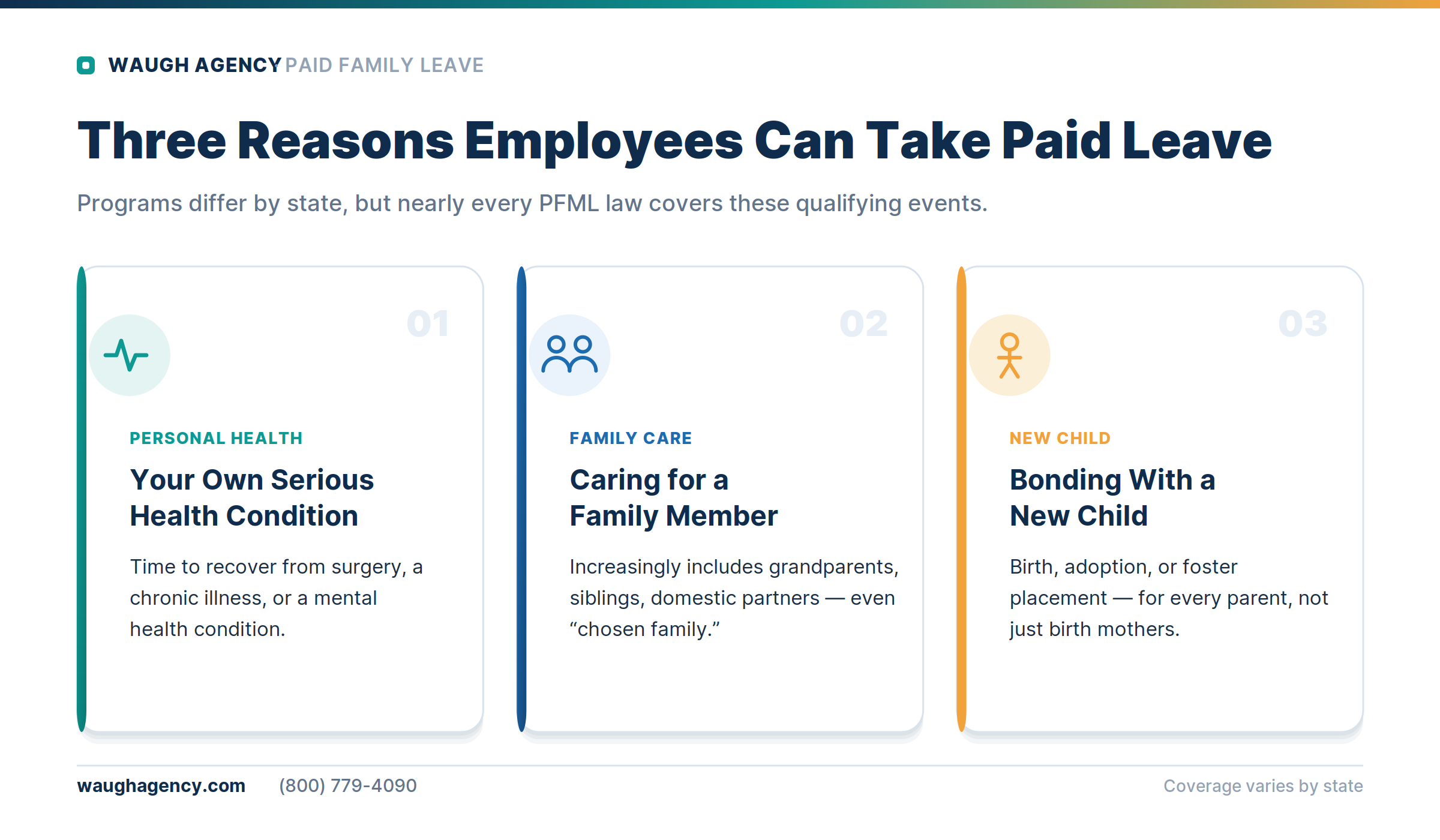
In the absence of a comprehensive federal paid family and medical leave (PFML) law, states have stepped in to fill the gap. Specifically, the federal Family and Medical Leave Act (FMLA) provides up to 12 weeks of job-protected unpaid leave. However, it covers only certain employers and employees, and it doesn’t put a single dollar in a worker’s pocket during their absence. As a result, state PFML programs change that equation entirely by providing wage replacement benefits during qualifying leave periods.
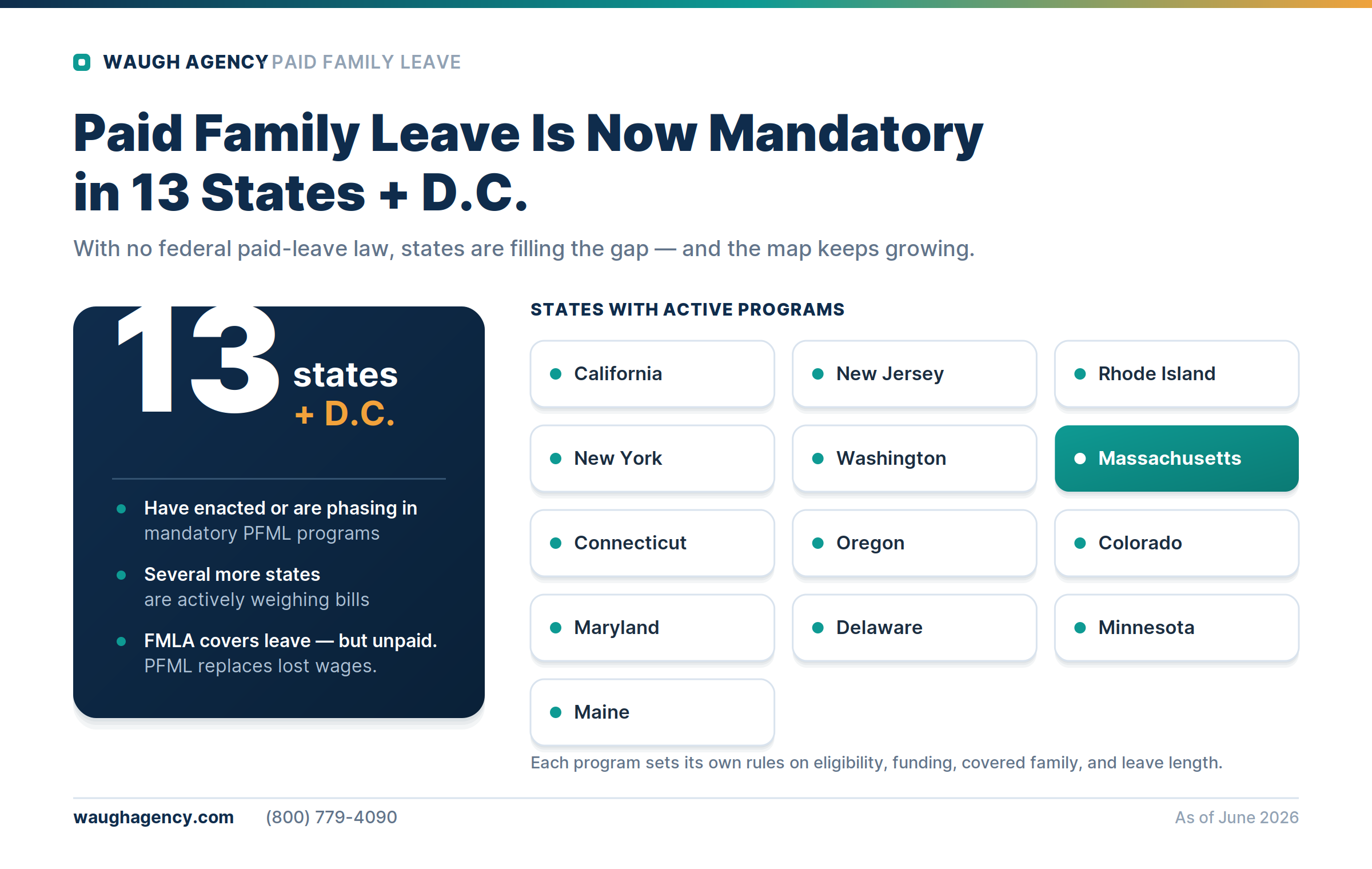
As of June 2026, more than a dozen states plus the District of Columbia have enacted mandatory paid family leave programs. In addition, several other states are actively considering legislation. The states that have implemented or are phasing in PFML programs include California, New Jersey, Rhode Island, New York, Washington, Massachusetts, Connecticut, Oregon, Colorado, Maryland, Delaware, Minnesota, and Maine. Importantly, each program has its own unique rules regarding eligibility, benefit amounts, funding mechanisms, covered family members, and leave durations.
What Qualifies for Paid Family and Medical Leave?
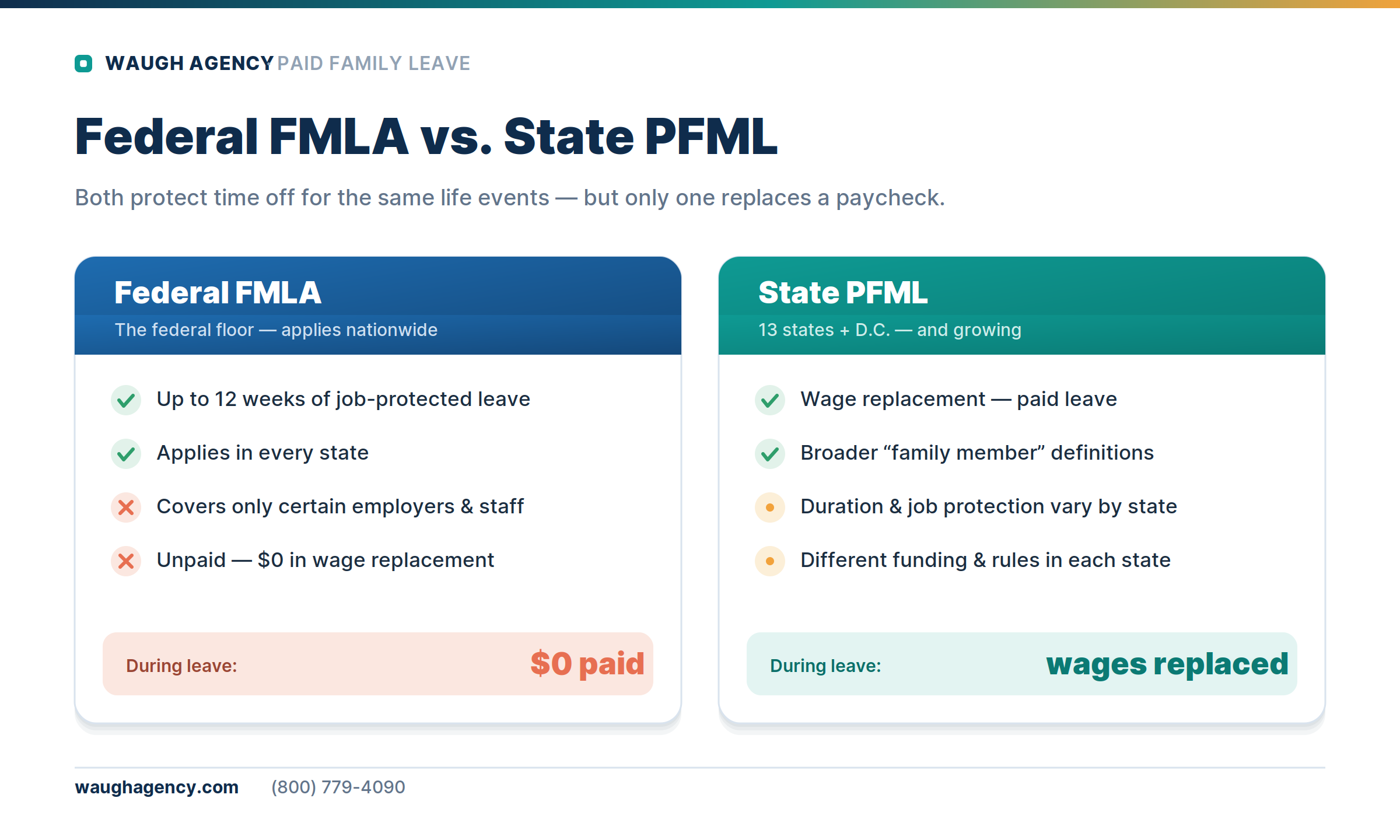
While specific provisions vary by state, most PFML programs generally cover three broad categories of leave:
- Personal serious health condition: Employees can receive wage replacement benefits when they need time off to recover from their own significant medical condition. For instance, this includes surgery, chronic illness, or mental health conditions.
- Caring for a family member: Workers can also take leave to care for a close family member with a serious health condition. The definition of “family member” varies by state. However, it increasingly extends beyond spouses, children, and parents to include grandparents, siblings, domestic partners, and even chosen family.
- Bonding with a new child: Similarly, new parents can take leave to bond with a newborn, newly adopted child, or foster child. This benefit applies to all parents, not just birth mothers. It reflects a broader cultural recognition that bonding time matters for every caregiver.
Paid Family Leave Compliance for Multi-State Employers
For organizations operating in a single state, understanding one PFML law is manageable. On the other hand, for employers with employees in multiple states, the compliance burden multiplies rapidly. Each state’s program has distinct requirements around employer contributions, payroll deductions, notice obligations, claims processes, and benefit coordination rules.
Key Compliance Considerations
Funding and contributions represent one of the most variable elements across state programs. For example, some states fund their PFML programs entirely through employee payroll deductions, such as New Jersey. Others split the cost between employers and employees, like Massachusetts and Washington. Still others place the full burden on employers. Consequently, contribution rates, wage bases, and reporting timelines differ in every jurisdiction.
Notice and posting requirements also vary significantly from state to state. For instance, employers may need to provide written notice to employees at hire, annually, or when a qualifying event occurs. Failure to meet notice requirements can result in penalties. Furthermore, it may also extend an employer’s liability.
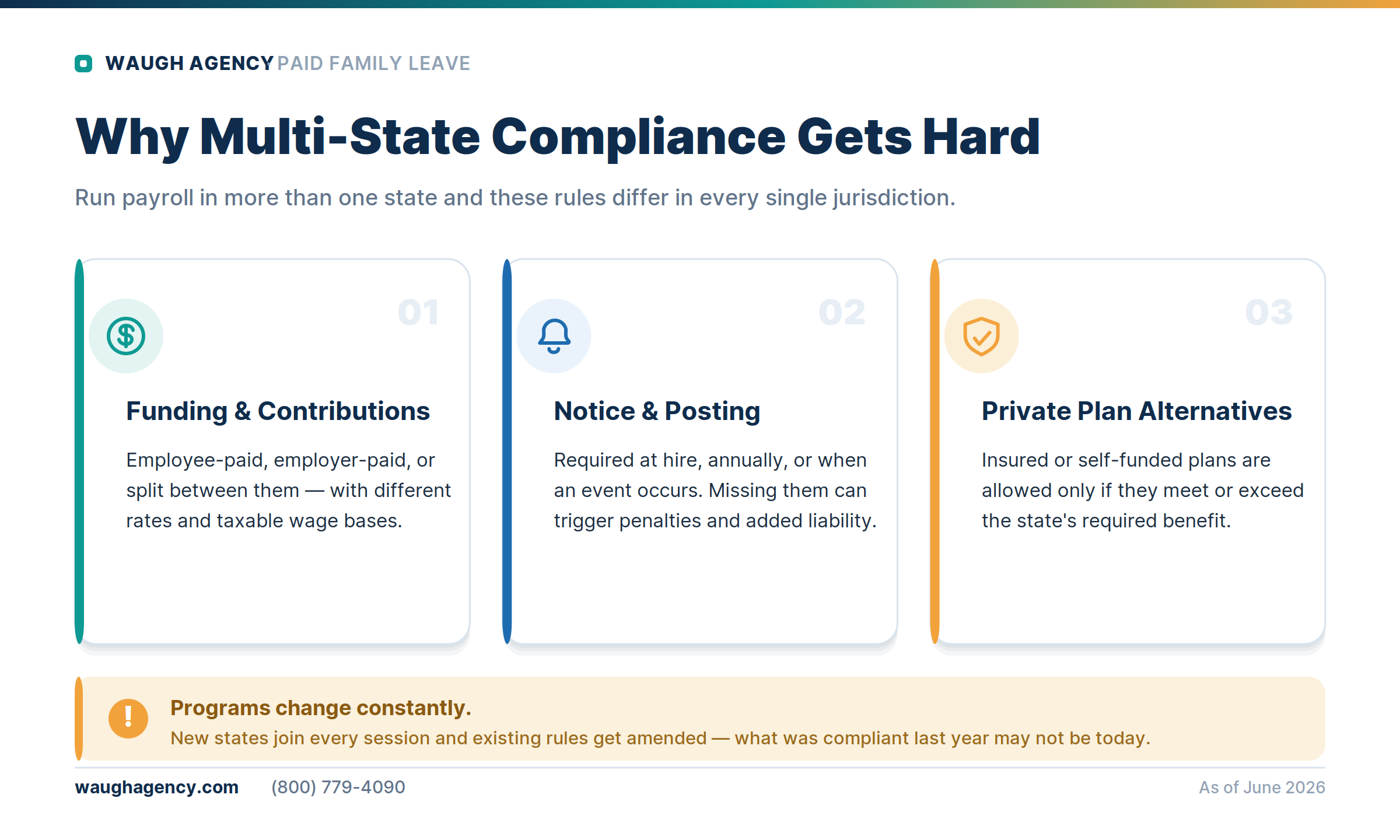
Private plan alternatives add another layer of complexity to the compliance picture. Many states allow employers to apply for a private insurance plan or self-funded plan in lieu of the state program. In that case, the private plan must meet or exceed the state’s benefit requirements. Therefore, managing these exemptions requires careful analysis and ongoing monitoring.
As a result, HR teams and benefits professionals must track legislative changes continuously. New states regularly join the PFML movement. Moreover, existing programs frequently amend their rules. In other words, what was compliant last year may not be compliant today.
How Paid Family Leave Interacts with Employee Benefits
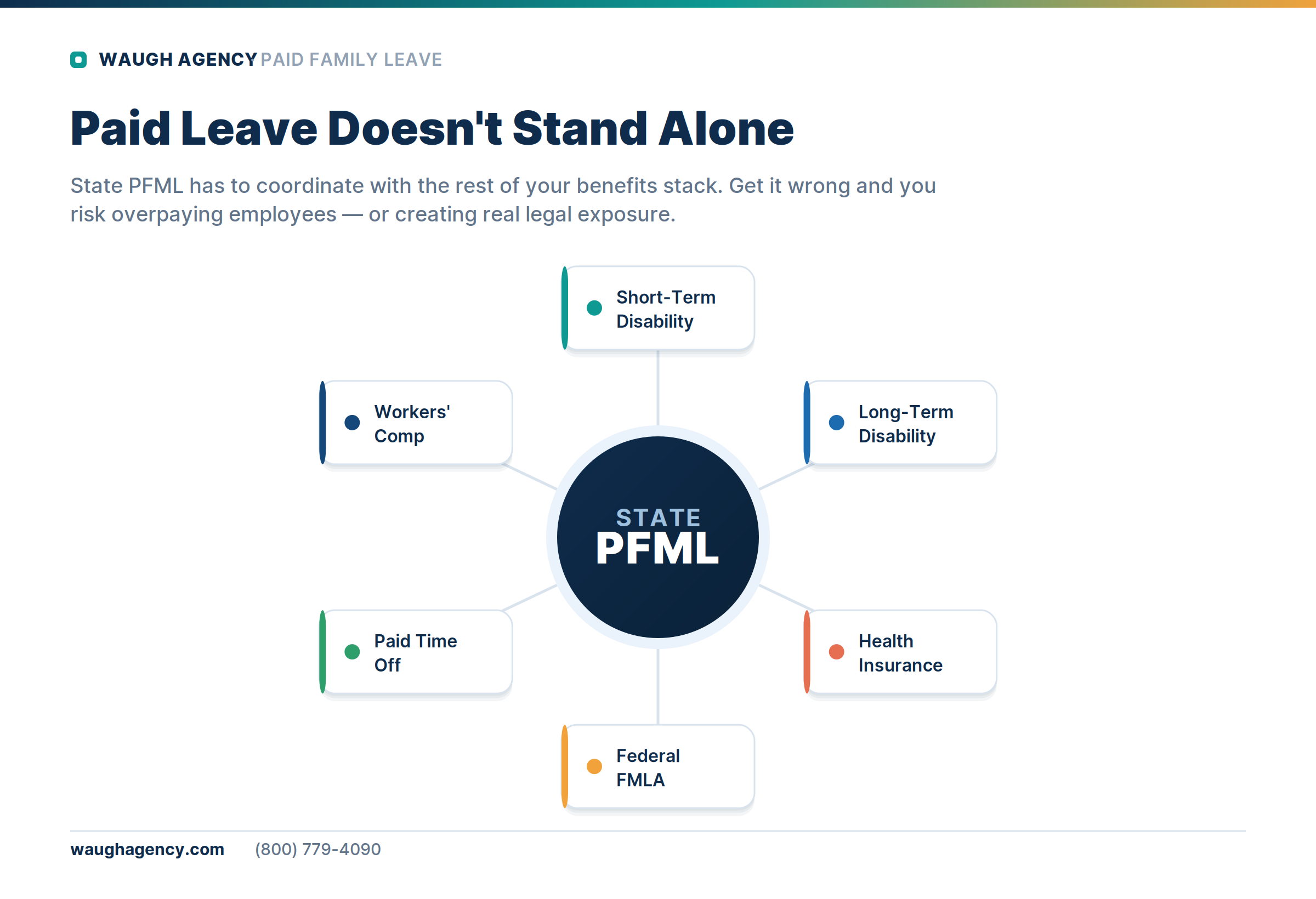
One of the most underappreciated aspects of PFML is how it intersects with the rest of an employer’s benefits program. It does not exist in isolation. Instead, it interacts with short-term disability (STD), long-term disability (LTD), health insurance, workers’ compensation, employer-provided paid time off, and federal FMLA in ways that require careful coordination.
Coordination with Short-Term and Long-Term Disability
When an employee takes leave for a serious health condition, both STD and state PFML benefits may be triggered at the same time. Accordingly, employers need clear policies on how these benefits coordinate. Can an employee collect both simultaneously, or does one offset the other? Ultimately, the answer depends on the state’s laws and the employer’s disability plan terms.
For example, some states let employers integrate their STD plan with the state PFML program. In those cases, the employee receives a combined benefit up to a certain wage percentage rather than stacking benefits. Conversely, others prohibit any reduction in state benefits based on private insurance payments. Getting this wrong can mean overpaying employees, which creates financial waste, or underpaying them, which in turn creates legal exposure.
Long-term disability plans also require attention in this context. If an employee exhausts PFML and STD benefits but still cannot return to work, the transition to LTD must be seamless. As a result, benefits teams need to confirm that elimination periods, definitions of disability, and offset provisions in LTD plans account for state PFML programs. For more on protecting income during illness or injury, employers should explore all available options.
Interaction with Health Insurance
Under FMLA, employers must maintain health insurance coverage during leave under the same terms as if the employee had continued working. Likewise, many state PFML laws have similar or broader benefit protection requirements. As a result, employers must ensure that premiums are collected appropriately during leave. In addition, employees need to understand their obligations to maintain coverage.
When an employee is on paid family leave but not simultaneously covered by FMLA, the health insurance rules may differ. Therefore, employers need to define these scenarios clearly in their benefits policies. Doing so prevents gaps in coverage or disputes about premium payments.
Impact on Employer-Provided PTO Policies
Another common coordination question involves employer-provided paid time off. Notably, some states allow employers to require concurrent use of PTO with PFML benefits, while others prohibit it. An employer’s PTO policy must therefore be reviewed state by state to ensure alignment with local regulations. Running PTO concurrently can shorten the total absence. However, it can also create resentment if employees feel they are losing earned vacation time.
Strategic Implications for Paid Family Leave and Benefits
The proliferation of these laws is more than just a compliance exercise. In fact, it also has strategic implications for how employers design and communicate their overall benefits package.
Reevaluating Benefits Design
Employers in states without PFML mandates may feel competitive pressure to offer voluntary paid leave benefits. This is especially true when competing with employers in states where such benefits are legally guaranteed. Consequently, many organizations have adopted national paid leave policies that provide a consistent baseline regardless of employee location.
Communication and Education
Even the most generous benefits are ineffective if employees don’t understand them. The interplay between PFML, STD, LTD, FMLA, and PTO creates a web of overlapping protections. For this reason, clear employee communication is essential. Benefits teams should therefore develop easy-to-understand guides, hold educational sessions, and train managers to direct employees to the right resources when a leave event occurs.
Leveraging Technology
Many employers are increasingly turning to benefits administration technology and leave management platforms. These tools track the overlapping requirements of multiple state PFML laws. In addition, they can automate compliance tasks, calculate benefit coordination, manage claims, and provide reporting that keeps HR teams ahead of regulatory changes.
Looking Ahead
The trend toward mandatory paid family leave shows no signs of slowing. With each passing legislative session, more states introduce PFML bills. Meanwhile, the scope of existing programs continues to expand. Furthermore, federal legislation remains a possibility that would add yet another layer to this complex environment.
For employers, the message is clear: proactive planning is essential. Understanding how these laws interact with a broader employee benefits program is not optional; rather, it is a fundamental responsibility. By investing in compliance infrastructure, clear communication, and strategic benefits design, organizations can ultimately turn the PFML challenge into an opportunity to support their workforce while managing risk effectively.
The employers who navigate this landscape successfully will view paid family leave not as an isolated mandate. Instead, they will treat it as an integral piece of a comprehensive benefits strategy. That strategy, in turn, attracts top talent, supports employee well-being, and ensures legal compliance across every jurisdiction where they operate.